Thursday, April 9, 2026
K-Beauty Evolution: Resetting the Beauty Bar

Korea Dethrones the Giants: A Strategic Export Surge
The global beauty hierarchy just got rewritten. In 2025, Korean cosmetics exports blew past the $10 billion threshold. In Q1, Korea officially overtook the US to claim the title of world's second-largest cosmetics exporter, behind only France. Total sales of Korean beauty products abroad have now doubled in five years, a trajectory no other country in the industry has matched.
This ascent was engineered through a deliberate global expansion playbook : aggressive market diversification, government-backed ODM/OEM infrastructure, and a distribution strategy that treats Southeast Asia, North America, and Europe as simultaneous frontiers. Korean companies are not following demand : they are creating it.
The momentum is relentless. Orders from Thailand exploded by 191% in 2024, while brands now own 22% of Vietnam's total cosmetics market. In Japan, K-Beauty products have moved from niche import shelves to mainstream fixtures. In China, despite a complex environment, companies hold ground through premiumization. This is a masterclass in "push market" strategy, fueled by world-class growth and infrastructure.
The High-Low Retail Squeeze and Social Commerce
K-Beauty executed a flawless high-low retail pincer across global markets : premium experiential flagships on one end, radical mass accessibility on the other. On the low end, brands became part of everyday life through stores and convenience collabs like Hana by Hince or &nd by Rom&nd.
In the US, Ulta now carries 30+ Korean brands, making professional-grade skincare products available to a vast consumer base of women who previously relied on traditional Western companies. This growth is accelerated by TikTok, where viral content compresses the awareness-to-purchase funnel. Social commerce allows products to convert at retail before a report ever hits a desk.
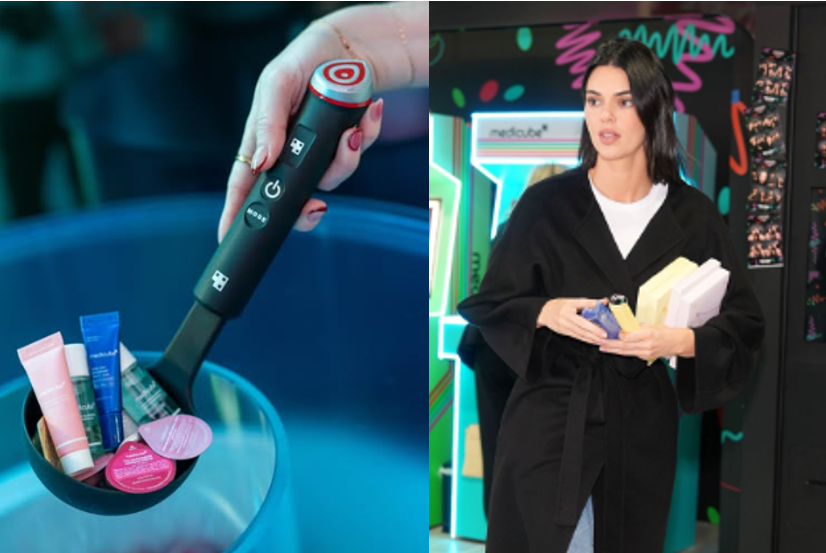
On the high end, Fwee's SoHo flagship signals a permanent arrival in global fashion capitals. Pop-ups like Medicube's Glow Mode ON in NYC or Tirtir's World Tour in Paris prove that physical presence in key Western markets is a proof of legitimacy. These are not just marketing exercises : they are commerce infrastructure in disguise.
Sensory Storytelling as a Competitive Weapon
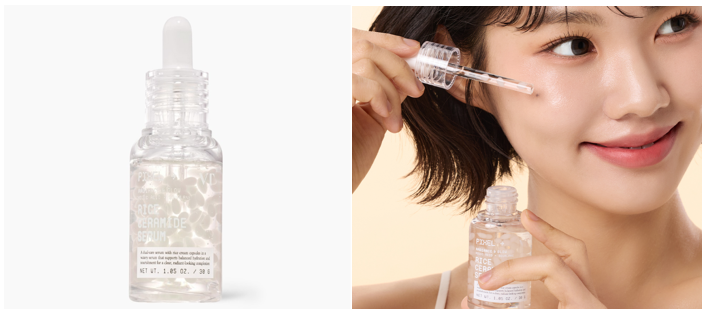
K-Beauty has cracked the code on Visual Efficacy : textures so compelling, you can see them working on contact. 2025 belonged to slimy cleansers and bouncy jellies. In 2026, a new kind of rice emulsion capsules appears. VT COSMETICS launched Rice Ceramide Serum, featuring rice-grain shaped cream capsules infused with nutrients.
This sensory dimension is a core export strategy. Korean beauty companies understand that in crowded retail environments, the product must perform visually before it performs on skin. In an era dominated by TikTok and digital content, traditional beauty report formats are no longer sufficient to capture consumer attention. Texture is the new content, driving growth across Europe and Japan where women demand immediate sensory proof.
From Ingredients to Infused Makeup and Hair Care
Having established PDRN and vegan formulations as cornerstones of skincare, brands are now migrating these ingredients into makeup and hair care. Cushion foundations are the primary vehicle for this evolution. Espoir's Silk Skin Layer Cushion combines NMN and Dual PDRN to deliver hydration alongside a long-wear finish.
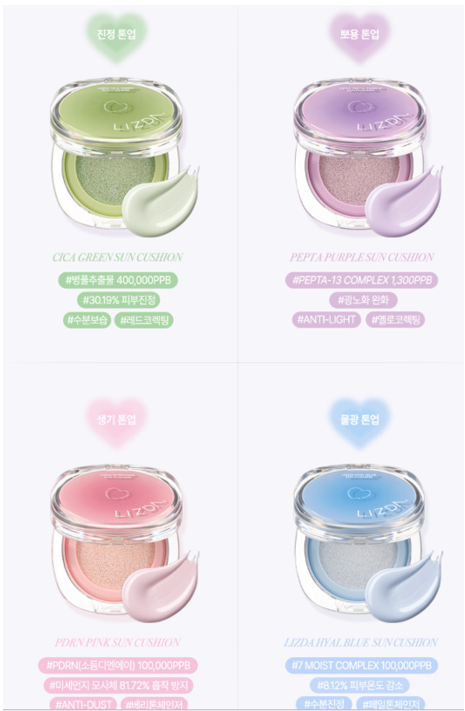
Lizda's Tone Up Sun Cushion illustrates this direction, adding the power of color-correcting variants that combine optical correction with targeted skincare actives. This migration is significant : Korean companies are leveraging their credibility to enter the color cosmetics market, a segment historically dominated by Western giants. Early sales reports suggest strong receptivity among distributors looking to expand their Korean brand portfolios.
K-Beauty's Global Reset: Beyond Fatigue
Talk of K-Beauty fatigue is missing the point. The relevant question is how the industry continues to rewrite the rules : not just in skincare, but increasingly in makeup, where the integration of active ingredients and color technology is setting a new performance standard.
What is unfolding is a structural shift in how beauty innovation travels globally : from Seoul flagships to Paris pop-ups, and from Asian market share to American drugstore shelves. Korean beauty isn't just expanding into the world : it is reorganizing it.
For a deeper look at these trends and what they mean for your market or brand, feel free to reach them or explore their work.